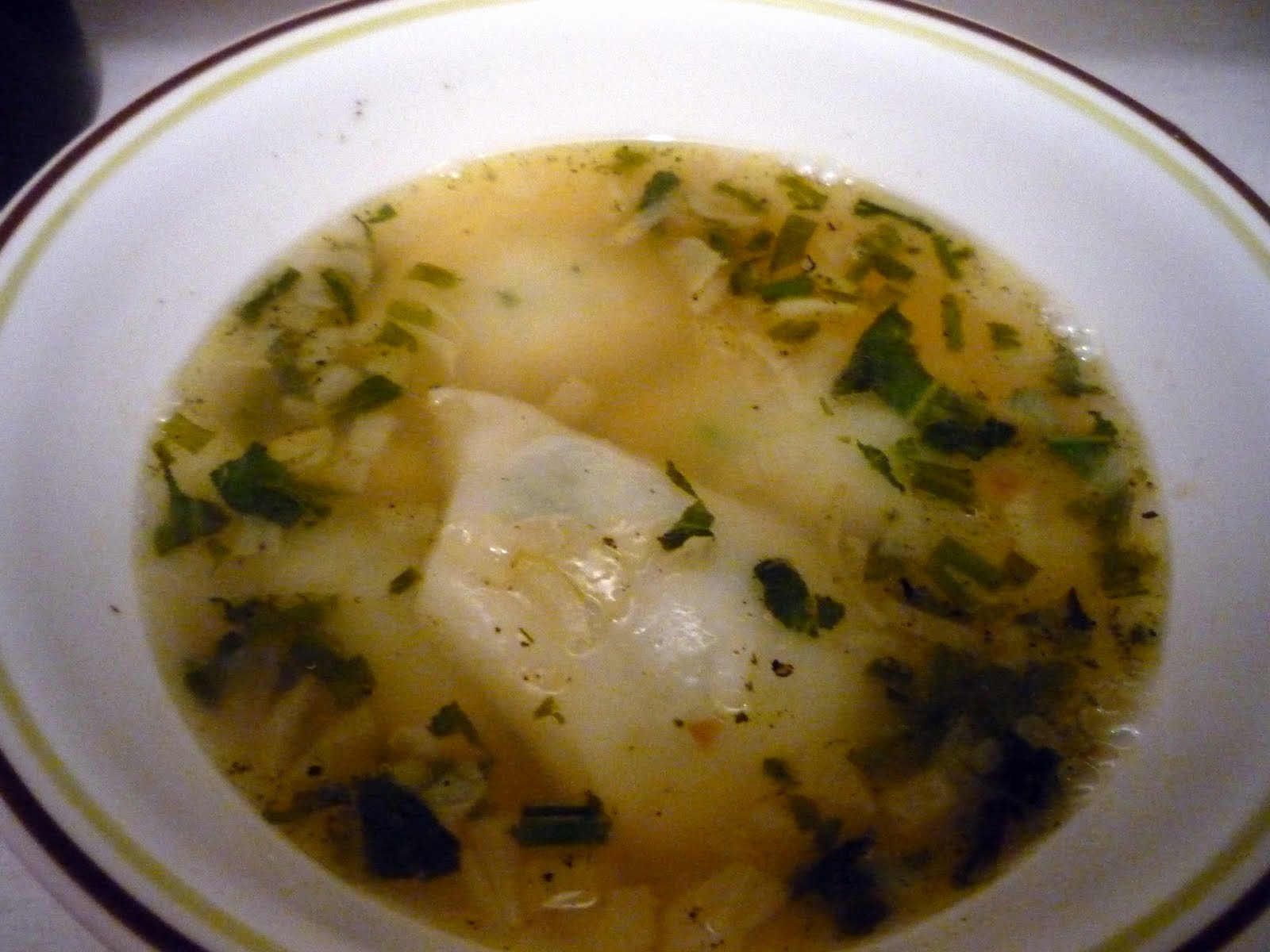
It is a source of great sadness to me that I never feasted on the wide variety of dumplings in the world before I went gluten-free. Sure, I ate some fantastic rice-flour packages of deliciousness in Vietnam, but it seems that most dumplings on restaurants and recipes rely on those gluten-ful wrappers (that may also contain egg). Ditto for ravioli. I used to LOVE ravioli, and I still miss its gluten-egg-cow cheese-laden goodness. One of my goals for this summer was to make gluten-free dumplings/ravioli. I have been really embracing the early summer produce lately - I have thousands of plans for strawberries once I can get to the farmer's market again - and so I fixated on a fresh, green pea dumpling. I think the picture accompanying this recipe is what really inspired me - that image of translucent dumplings with bright green innards, floating gently in a clear broth - so summery! I sat on my porch in the evening light to shell the peas.

I then blanched the shelled peas, and whipped them up in a food processor with shallots, sage, chives, olive oil, and lemon zest.

I was very, very pleased with the recipe for dumpling wrappers I found. The dough was easy to work with, and didn't taste too.. well, doughy after being steamed. I was surprised at how elastic the dough was. Rather than torture myself with rolling out dough on a surface and cutting out wrappers, I rolled and assembled each wrapper in my hands, pinching off a glob of dough and flattening it out before sealing it shut around some filling.


I got better at the wrappers as I went. You can see how thin I got one here.

I steamed the dumplings in a jury-rigged steamer - a colander balanced over a big pot of simmering water.

I was very pleased with the results - the fresh, green taste of the dumplings together with the tangy, herby broth. It made for a great dinner - even at 11 pm.
Spring pea dumplings in lemon-sage broth: gluten-free and vegan (loosely adapted from 101 Cookbooks and Epicurious)
1 cup shelled green peas
1/4 cup finely chopped fresh sage, plus a few stems, cut in half
1/4 cup finely chopped chives
1/2 cup minced shallots
zest and juice of one lemon
3 cups low-salt vegetable broth (chicken works too)
olive oil
dumpling wrapper dough (recipe follows)
Boil a medium-sized saucepan of water. Dump the shelled peas in the water, and cook very briefly, until the peas turn bright green and rise to the surface of the water. It will take less than a minute. Drain the peas immediately and pour cold water over them continuously until they are cool. This stops the peas from cooking further.
In the bowl of a food processor, or in a blender, combine the peas and 2 tablespoons of chives,2 tablespoons sage, and 1/4 cup shallots. Add half of the lemon zest, and a tablespoon of the olive oil. Process the mixture until desired texture, then season sparingly with pepper and salt. Set aside.
For each dumpling, pinch about a tablespoon of dough from the ball. Roll the small piece of dough briefly in your hands, until it has a uniform, smooth, elastic texture. Flatten out the dough in your hands, using the knuckles and heel of one hand to press the dough against the other hand. When the dough is as thin as you can get it without breaking it, or is about 4 inches in diameter, place a small amount of the filling (a little less than a tablespoon) in the center of the wrapper. Fold the wrapper over the filling and pinch the edges shut. Cover the freshly-assembled dumplings with a damp paper towel as you work, so they don't dry out.
In a medium-sized saucepan, saute the remaining shallots in the olive oil until soft. Add the broth, and the stems from the sage. Simmer.
While the broth is simmering, steam the dumplings. If you have a bamboo steamer you can use that. If not, place a small amount of water in the bottom of a large pot, so that it does not reach the bottom of a colander balanced in the pot. Oil the inside of the colander to prevent the dumplings from sticking, and arrange the dumplings inside. Cover the top of the colander. Bring the water to a simmer, and steam the dumplings until the wrappers are soft and translucent. (Took about 20 minutes for me).
Add the remaining chives, sage, and lemon zest, as well as the lemon juice, to the broth. Continue to simmer for about one more minute, then remove from heat, and season with salt and pepper to taste. Remove the sage stems.
Place a few dumplings in the bowl of each bowl and ladle the broth over them.
Dumpling wrapper dough (adapted from Hey, that tastes good!)
1/2 cup tapioca starch
1/2 cup sweet rice flour
1 teaspoon xanthan gum
1 teaspoon Ener-G egg replacer
1 tablespoon oil
5-6 tablespoons water
Combine the tapioca starch, sweet rice flour, and xanthan gum in a medium bowl, and stir to combine. In a separate small bowl, combine 5 tablespoons of water and the Ener-G egg replacer. Add the oil to the dry ingredients, then add the water mixture. Stir to combine. Add another tablespoon of water as needed. Mix the dough with clean hands to help incorporate the last of the flour, and knead briefly in your hands until the dough has a smooth and elastic texture.