Friday, June 4, 2010

Strawberry Rhubarb Crumble, gluten-free


Before today, I had never eaten rhubarb. I knew a little about it - it was a late spring fruit (vegetable?), glossy ruby in color and often paired with strawberries. But rhubarb has never knowingly passed my lips. Somehow, though, I became fixated on baking a strawberry rhubarb pie. I have been obsessed with seasonality lately, and have been skulking around Pittsburgh muttering "Peas! Spinach! Strawberries! Scallions! Rhubarb! Strawberries!" You know, like a crazy person.


Enter a week of trying and failing to obtain the necessary ingredients from farmers markets. I finally succeeded yesterday, biking to the Citiparks market in Bloomfield and picking up a backpack-full of tasty produce and some wonderful runny goat yogurt. At the stand for the yogurt, I tasted a dense and flavorful feta, and also a tiny cup of lovely pink yogurt, flavored with... rhubarb! I tasted it and immediately knew that my big plan for a rhubarb-including dessert was a Very Good Idea.


When using gluten-free dough, crumbles are much easier to work with than pie crusts. There is a lot I would rather do than struggle with a fragile, tear-prone, absolutely-refuses-to-roll-out-properly dough. This crumble is so easy - the most time consuming step is washing and chopping the fruit. You mix the chopped fruit with some sugar, lemon juice and cornstarch, whip up a topping from flour, baking powder, sugar, and melted butter, dump it all in a pie dish and bake.


A note on liquid/cornstarch: my strawberries were extremely ripe, and very juicy. Adding the sugar pulled out all that liquid, resulting in something that more resembled strawberry-rhubarb soup than a pie. I decided to skip half of the lemon juice for this reason. I was nervous about all this liquid and added about 3.5 tablespoons of cornstarch, not wanting to add much more for fear of a gluey filling. Even though the filling was very liquidy, it baked up almost a little bit too firm. I guess the lesson here is don't worry too much about how liquidy your filling is!


Strawberry Rhubarb Crumble, gluten-free (adapted from... where else? Smitten Kitchen)

Topping:
1/2 cup sorghum flour
1/2 cup tapioca or potato starch
1/3 cup almond meal
1 teaspoon xanthan gum
1 teaspoon baking powder
2 tablespoons white sugar
4 tablespoons demerara/turbinado/raw sugar
zest of half a lemon
8 tablespoons margarine or butter, melted

In a medium-sized bowl, mix together all ingredients except for the margarine/butter. Pour the melted butter over the dry mixture, stirring with a fork until you form "pebbles" of various size. Refrigerate until needed.

Filling:
1 quart + a few more strawberries, washed, hulled, and quartered
1 1/2 cups of rhubarb, washed and chopped into 1-inch pieces (I chopped a bit smaller and used a bit more, which was fine)
Juice of half a lemon (increase to juice of one whole lemon depending on juiciness of strawberries)
1/2 cup of sugar (adjust to taste and the sweetness of your strawberries)
3-4 tablespoons cornstarch (adjust according to juiciness of strawberries)
pinch salt

Preheat the oven to 375.
Combine the chopped fruit in a large bowl, or right in the deep 9-inch pie dish, if you're feeling daring. Add everything except the cornstarch, and decide how much cornstarch to add based on the juiciness of the mixture.
Dump the fruit mixture in the pie dish if you didn't start out there, and sprinkle the crumble evenly over the top.
Cover a baking sheet with foil, place the pie dish on top, slide into the oven, and bake for 40-50 minutes, or when the topping has started to brown and the fruit is bubbly. Let cool on a rack before serving, and store covered in the fridge.

Saturday, May 22, 2010

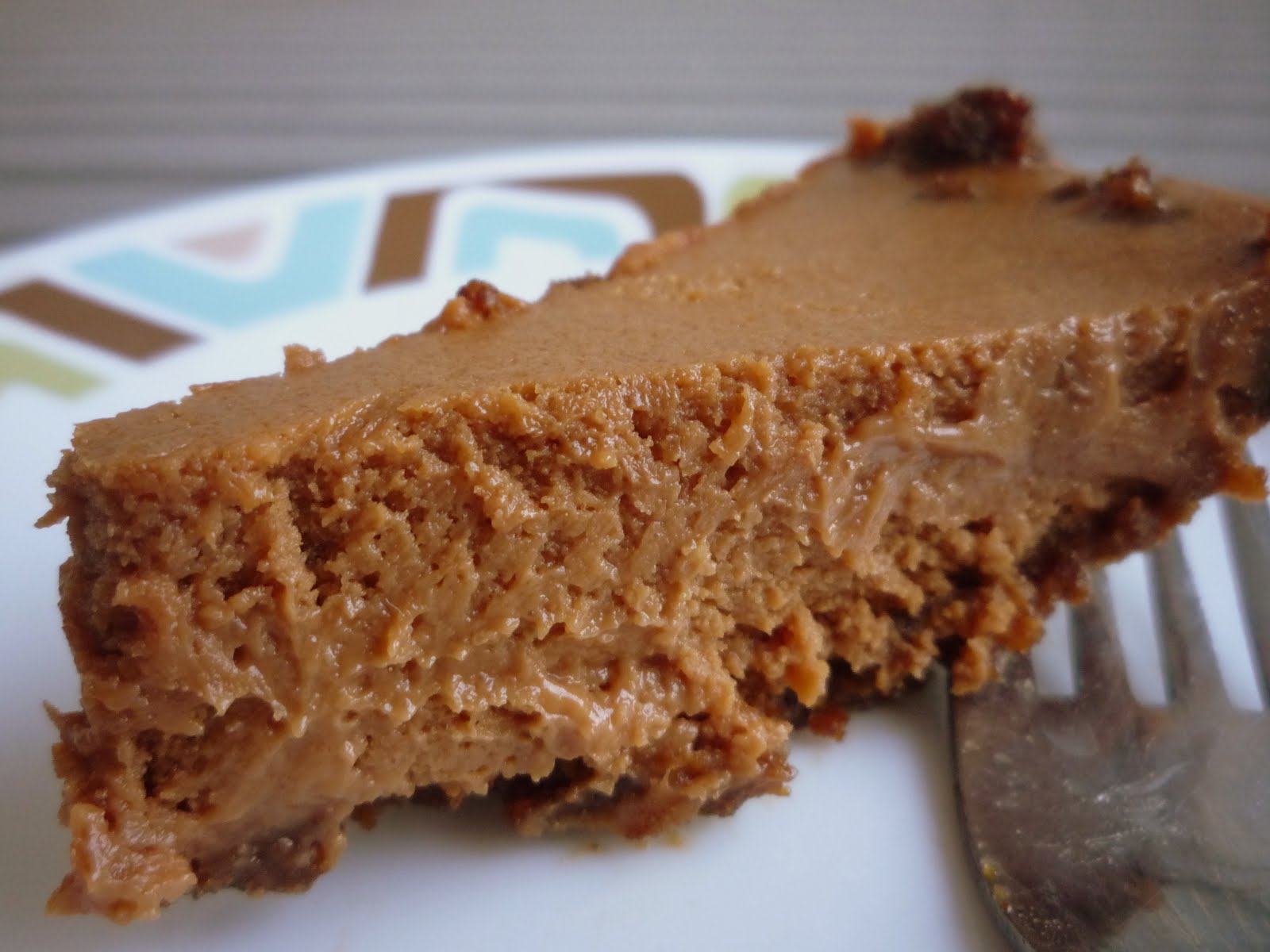
Gluten-free soy-free egg-free Dulce de Leche Cheesecake with goats’ milk


Cheesecake without cows’ milk! I bet you didn’t know it was possible. I sure didn’t until recently, when I unwrapped a soft, mild chevre. Spreading it on some gluten-free crackers, I thought “Wow, this tastes just like cream cheese!” If you are unable to eat cow’s dairy, as I am, you probably miss cheesecake, since goat’s cream cheese doesn’t seem to exist on any planet. What a surprise it was to me that I could use chevre in place of this elusive ingredient.

I started this recipe at 5pm on Thursday evening, hoping I would be able to finish it in time to bring to my friends house at 9pm that night. Please excuse me while I chuckle knowingly at my naiveté. It is Saturday afternoon, and I am only just getting my first bite of this delicious cheesecake.

Granted, this is counting long breaks to sleep, work, and do other various things, but let’s be honest here. This cheesecake, as I made it, involves a batch of cookies being whipped up, baked and ground, a pan of dulce de leche spending 3 hours on the stove, and a finally-filled cheesecake spending 45 minutes in the oven, 2 hours on the cooling rack, and 6 hours in the refrigerator. This is not a dessert for those desiring instant gratification.

But, oh man, was it worth it.

Now, I have stolen this recipe from Smitten Kitchen (again), but have adapted it in a number of ways. Obviously, cream cheese and eggs and graham crackers have been replaced by things I can eat. I also elected to make this as a traditional round cheesecake in a pie dish, rather than in squares, and I omitted the chocolate glaze, wanting a more pure dulce de leche flavor and lacking the resolve to go through one more step.

This recipe is an undertaking, but it is less so if you have fewer allergies than me. You can use store-bought cookies or graham crackers for the crust, and even store-bought dulce de leche (or use the condensed milk recipe, which is much easier, found at the end of the original recipe at smitten kitchen). Good luck, and enjoy your cheesecake.


Gluten-free soy-free egg-free Dulce de Leche Cheesecake with goats’ milk (adapted from Smitten Kitchen)

Crust
1 cup crumbled gluten free cookies (ginger is delicious) or graham crackers. Or you can use my ginger cookie recipe, below.
2 tablespoons sugar (omit if using a sweet cookie, like my ginger cookies)
3 tablespoons unsalted butter or margarine, melted

Filling
1 teaspoon unflavored gelatin (about half an envelope of the Knox stuff) or 1 teaspoon agar-agar (this will make it vegetarian)
1/4 cup whole milk or a creamy milk substitute, such as soy, almond, or hemp milk.
8 oz mild chevre (soft goat cheese) or cream cheese, softened.
2 large eggs or equivalent in Ener-G egg replacer
3/8 teaspoon salt (skip this if using a salty chevre)
1 cup dulce de leche (recipe below)

To make the crust:
Preheat oven to 325, making sure your oven rack is in the centre position. Grease the inside of a 9-inch round pie dish (a heavy glass one works best) with butter or a neutral oil. Take the cookies/graham crackers you have decided to use and grind them up in a food processor. (If you don’t have a food processor, you can put the cookies in a large Ziploc bag, cover the bag with a dish towel, and roll a rolling pin over the towel, pressing down to crush the cookies. When the cookies have been ground down to crumbs, transfer them to a bowl) If using graham crackers, add the sugar and mix in. Add the butter and mix until combined. Press this mixture into the pie dish, on the bottom and up the sides as far as it will go without being too thin. Pop in the oven and bake for 10 minutes, then remove from the oven and let cool for 5 minutes.

To make the filling:
While the crust is baking/ cooling, pour the milk or milk substitute into a small bowl and sprinkle the gelatin/agar agar over the surface. Let stand for 2 minutes. In the bowl of a stand mixer, or a large bowl if you are using a hand-mixer/your guns, add the chevre/cream cheese, the eggs/egg replacer, and the salt, if using. Add the gelatin-milk mixture, making sure to scrape up all the potential clumps at the bottom of the small bowl. Beat at medium speed for about two minutes until well combined, scraping the bowl as needed. Gradually add the dulce de leche.

Pour the filling into the crust in your pie dish, making sure the top is smooth and beautiful. Don’t stress out if the filling reaches above the top of your crust, it will be ok. Place the pie dish in a water bath – a large, 9x13 pan full of hot water. Very carefully place this in the oven, and bake for about 45 minutes, until the center is just barely set. Remove from the oven and cool on a rack for 2 hours, then refrigerate for at least 6 hours.

Ginger cookies for crust (adapted from All Recipes.com)

This recipe makes way more than you need for the crust. You only need a cup of crumbs, which for me was about half of this recipe. You can easily bake half of these for the crust, then put the rest of the dough (well-wrapped) in the fridge or freezer
for ginger cookie deliciousness later.

1 cup sorghum flour
1/2 cup tapioca starch
1/2 cup potato starch
1/4 cup almond meal/flour
2 teaspoons ground ginger
1 teaspoon baking soda
3/4 teaspoon ground cinnamon
1/2 teaspoon ground cloves
1/4 teaspoon salt (I omit this because the dairy/soy-free spread I use is salted)
3/4 cup butter or margarine, softened
3/4 cup white sugar
1 egg or equivalent in Ener-G egg replacer
1/4 cup molasses
2 tablespoons white sugar

Preheat the oven to 350. Prepare a baking sheet with parchment paper or a Silpat. Stir together the dry ingredients – flours, spices, and baking soda. Set aside.
In a stand mixer, with a handheld mixer, or with a whisk and your biceps, beat the butter/margarine until creamy. Add the 3/4 cup sugar and cream together until light and fluffy. Add the egg/egg replacer, and then the molasses. Gradually stir in the dry ingredients, adding a little bit at a time.
Put your 2 tbsp sugar in a shallow bowl or on a small plate. Take the dough and form small balls, about 1 inch in diameter. Roll each ball in the sugar before placing on the baking sheet.
If you are making these to eat as cookies, bake them for 8 minutes for a very soft cookie, or 10 minutes for one with more of a crisp to it. Remove the cookies from the sheet immediately and cool on a rack. If you are making these to use as a crust, bake for 12-14 minutes. You want these to get as crisp as possible in the oven without burning them, so monitor them very closely. If using for the crust, you need to let these cool and harden completely on a rack before starting the crust.

Dulce de Leche (adapted from Alton Brown)

1 quart (4 cups) whole goats milk
1 vanilla bean
1 ½ cups white sugar
1/2 teaspoon baking soda

Before you start, take the saucepan you are going to use – you want one that seems much too large for the volume of liquid – you’ll see why below. Measure out one cup of water and put it in the saucepan, and note what that volume looks like – how far it goes up the side of the pan. This will help you know when the dulce de leche is done much later. Dump out the water, you won’t be needing it. Water your plants.
Place the milk and sugar in a large saucepan. Split the vanilla bean and scrape the seeds into the milk, then add the bean.
Turn on the medium heat and simmer, stirring occasionally, until the sugar is dissolved.
Add the baking soda and stir to combine. This is why you want a large saucepan! It will froth and foam like mad!
Turn the heat down to low and simmer at the lowest possible level – you want the surface to be slightly agitated, but do not let it boil. Continue to simmer, uncovered, stirring regularly, watching the liquid slowly take on a wonderful golden hue. After about an hour, remove the vanilla bean.
Continue to simmer about another 1 ½ to 2 hours, until the liquid has reduced to about one cup and has taken on a deep, dark caramel color. Use the color and the volume (remembering what one cup of liquid looked like with the water earlier) to decide when you’re done. Do not use thickness! If you wait until you have a “proper dulce de leche thickness” on the stove, your cooled dulce de leche will be way too firm!
Take the pan off the heat and let cool before using in cheesecake filling. If making ahead, refrigerate in an air-tight container.

Friday, May 7, 2010

Vanilla-cinnamon goats' milk panna cotta with caramel sauce


So, Cinco de Mayo was a few days ago. I am at home with my family for about 10 days, until I return to Pittsburgh to see Sam graduate and to start my summer. I have been cooking for my family almost every night, which I enjoy. It is a pleasure to work in my parents' large, well-equipped kitchen, and I love having a dishwasher that is not me. My parents don't get too excited about cooking, so they are more than happy to give up the title of head cook. Also, if I cook, I am able to control exactly what is put in front of me, and so am able to both avoid allergens and include the foods I love.

For the holiday, I soaked some diced chicken breasts in a lime-garam masala-brown sugar marinade for about 24 hours, then roasted them to roll up in corn tortillas for enchiladas in a mole-ish sauce. I also made my favorite black bean salad, with red onion, tomatoes, garlic, cilantro, and lime juice.

For dessert I wanted to make flan or creme caramel, since this is a fun Mexican-themed dessert. However, most of these recipes contain eggs. I decided that panna cotta was close enough, since this Italian pudding is naturally egg-free. I flavored it with some cinnamon and vanilla, and topped it with a rich, buttery caramel sauce. Yum yum.


Vanilla-cinnamon goats' milk panna cotta (adapted from David Lebovitz)

4 cups whole goats' milk
1/2 cup sugar
2 teaspoons vanilla extract
1 teaspoon cinnanon
4 1/2 teaspoons unflavored gelatin
4 tablespoons cold water

Put the cold water in a bowl large enough to accommodate all ingredients. Add the gelatin and let stand for five to ten minutes, until softened.

While the gelatin is softening, put the milk and sugar in a medium-sized saucepan and heat on low until the sugar is dissolved. This step can also be done in the microwave. Remove from heat. You do not want to boil the milk or reduce it, just dissolve the sugar. Stir in the cinnamon and vanilla until well-combined.

Take eight custard cups and oil the insides with an neutral oil. If you don't have eight cups of equal size, improvise!

Add the very warm milk mixture to the gelatin and mix until all clumps of gelatin are dissolved.

Divide the mixture out into the oiled cups and cover each cup tightly with plastic wrap. Refrigerate for at least two hours, or until firm.

When you are ready to eat, unmold the panna cotta by sliding a thin sharp knife around the edge of each cup, then invert the cup onto a serving plate. Top with caramel sauce, if desired (recipe below).

Caramel sauce (adapted from Smitten Kitchen)

1/2 cup white sugar
3 tbsp salted butter or margarine
1/4 cup whole goats' milk

Heat the sugar over medium heat in a saucepan bigger than you think you'll need. Stir constantly at first, making sure the sugar melts evenly. Continue cooking the liquefied sugar until it has taken on a beautiful, coppery color, stirring frequently to ensure it does not burn. Do not taste it! Hot sugar is burny and will instantly cool on your teeth, giving you some (literally) sweet grillz.
When the sugar is the right color, add the butter, and stir in to combine. Turn off the heat, and stir in the milk. It will foam up a lot.
If not using right away, store tightly covered in the refrigerator.

Monday, April 19, 2010

Winter Squash Soup


Yes, I know. It's April! This is no time for
winter squash soup! I know, I know. But, the school year is almost over (just a week of class and then finals to go) and I am trying to simultaneously clean out my fridge and avoid buying anymore food. I had a butternut squash and an acorn squash tucked up in my pantry, bought in January, and when I split them open for this soup, they were weirdly perfect. They did not suffer at all from their long confinement.

We are also having a chilly, rainy weekend and so I thought some thick warm soup would hit the spot. It did.

Winter Squash Soup (adapted from Smitten Kitchen)

The original recipe calls for gruyere croutons made from slices of bread. I used what I had on hand, and it turned out great: I had these crispbreads and a little tub of crumbled soft goat cheese. It turned out yum, but you can totally substitute whatever you enjoy/have/can eat.

4 tablespoons butter or margarine
1 large onion, finely chopped
4 large garlic cloves, chopped
3 14 1/2-ounce cans low-salt chicken broth
1 medium-sized butternut squash
1 medium-sized acorn squash
1 1/4 teaspoons minced fresh thyme
1 1/4 teaspoons minced fresh sage
2 teaspoons ground cumin
1 teaspoon ground ginger
1/8 cup whole goats' milk (optional)

For each toast:
1 cracker or thin slice of bread
2 tablespoons crumbled soft goat cheese
1 pinch dried thyme
1 pinch dried sage
Salt and pepper to taste.

Preheat the oven to 425. With a large, sturdy knife, halve the squashes and seed them. Place them on a baking sheet and roast until soft. Remove from oven and set aside. When it is cool enough so you don't burn yourself, scoop the flesh of the squashes out of the skins and set aside in a bowl.


Plop the butter in a large pot and melt over medium heat. Add the garlic and onion and saute until soft, which takes about 10 minutes. Be very careful not to burn the garlic! If it starts to get a little too brown, turn down the heat. Add the squash, the broth, and the herbs and bring the mixture to a boil. Reduce the heat to a simmer, cover, and let cook until the squash is very soft, which should take about 15 minutes.

Puree the soup in a blender (you will probably have to work in batches) or using an immersion blender. Return the soup to the pot, bring back up to a simmer, and add the goats' milk, if you're using it. Season with salt and pepper. At this point you can chill the soup, covered, in the refrigerator if you want to serve it later.

Take the crackers or bread slices and spread with the goat cheese, then sprinkle with the thyme, sage, and salt and pepper. Toast in a toaster oven or under the broiler in your oven until the cheese melts. Don't let it burn! Serve each bowl of soup with a toast.

Wednesday, March 31, 2010

Injera

When I arrived at college almost four years ago, I had never tried Ethiopian food. In fact, it was not until almost two years later that I finally went to a little restaurant in Pittsburgh called Abay and had a big plate of injera and wat. I was instantly in love. I have always been a spice fiend, and the complex flavors of the dishes blew me away. I was addicted, and I still crave those spices.

However, I have also always been a bread fiend, and injera, the spongy, tangy bread made from teff, is a big part of the Ethiopian eating experience. Rice is just not the same. The two Ethiopian restaurants in Pittsburgh use gluten-containing flours in their injera, so I have been on a mission to make a gluten-free version. I have been served flawless gluten-free injera in Washington, DC, so I know it is possible. Traditional injera is made from only teff flour, and rather than having leaveners added, the slurry of teff and water is fermented to develop the flavor and create air bubbles.

However, the web is sadly bereft of recipes that are both authentic and functional. We have, for example, monstrosities from Paula Deen that have no teff at all, and substitute baking powder for the fermentation step.

I picked out this recipe and gave it a whirl, fermenting the teff-water slurry for 3 days and cooking according to the instructions. It. was. awful. I am sad and I don't know where to go from here. The not-injera had none of the tangy sourdough taste, and refused to cook up like I remembered. I am wondering if the same cooking technique that I use for Indian dosa could be employed here: pour the batter into a cold skillet and heat it up from there.

As an unrelated aside, injera batter looks like chocolate milk:


Saturday, February 20, 2010

Homesick

Missing this:

And this:

This:

Oh, and most definitely these:


Hanoi, why did we have to part?

Sunday, December 27, 2009

Gluten-free soy-free egg-free dairy-free chocolate tart

Ah, Christmas.


This was my first Christmas with food allergies, but I found it a lot less stressful than Thanksgiving. First, I had some experience in making a food-centric holiday work for me and my family, and second, the menu for Christmas is not as rigid as for Thanksgiving. I don't understand when people basically have Thanksgiving dinner again on Christmas day: you had turkey and stuffing and pumpkin pie month ago, why do you want it again?
I had some mixed success with short ribs bourguinon. I think the short ribs I used were too fatty - there didn't seem to be much meat on a lot of them. The meal was a stupendous amount of work for an average result, leaving me exhausted and a little dissatisfied.

Dessert, however, included this intense chocolate tart. My stepdad always requests a chocolate pie for holidays, and my mum usually obliges with the Jello pudding + Keebler crust deal. I wanted to prove that I could remake this classic dessert with better ingredients that also just happen to be safe for me to consume. The great thing about remaking this tart egg and dairy-free is that the chocolate provides a lot of the structure, so you don't have to worry so much about what you lose when you swap out ingredients.

It's just a big pile of chocolate. Its hard to mess up.


Gluten-free soy-free egg-free dairy-free Chocolate Tart (adapted from Smitten Kitchen)

This recipe will make enough for a 9-inch tart pan

Sweet tart dough (Pate Sucree):
3 tablespoons unsalted margarine or butter, softened but not melted
3 tablespoons trans-fat free vegetable shortening such as Spectrum Organic, at room temperature
1/2 cup powdered sugar (confectioners sugar), sifted
3 tablespoons almond meal or ground blanched almonds
Pinch of salt (omit if your margarine/butter is salted)
1/2 teaspoon vanilla extract
2 eggs or equivalent amount of egg replacer
1/3 cup + 3 tablespoons sorghum flour
1/3 cup tapioca starch
1/3 cup potato starch
1 teaspoon xanthan gum

You can use either a stand mixer or a food processor to make this dough, and I'm sure you can do it by hand as well. I used the stand mixer, so here are the directions for that method:
In a medium-sized bowl, combine the sorghum flour, tapioca and potato starches, and xanthan gum. Set aside.
Using the paddle attachment, beat the butter and shortening together until smooth. Add the confectioners sugar and beat until well combined, stopping to scrape down the bowl as needed. Add the almond meal, the salt (if using), and the vanilla one at a time, combining each ingredient into the dough before adding the next one. Add in the flour mixture, stirring only just until combined. Do not over mix!

With clean hands, gather the dough into a ball and press into a rough disk. Wrap tightly in plastic wrap. Refrigerate for at least four hours or up to two days.

When you are ready to use the dough, grease a 9-inch tart pan with butter or neutral oil.
Take the dough out of the fridge, unwrap it, and sandwich the disk between two large pieces of plastic wrap. Roll the dough out with a rolling pin on the counter or on a large cutting board. You will need to lift up the sheets of plastic periodically so that they don't get rolled into crevices in the dough. Also, you will need to flip the dough over periodically so you can roll out the other side. If the dough gets too soft and sticky, pop it back in the fridge on top of the cutting board or a baking sheet.
When the dough has been rolled out large enough to cover the bottom and sides of your tart pan, peel off the top layer of plastic and carefully flip the dough over and lay the exposed side down in the tart pan, centering it. Peel off the other sheet of plastic, which should now be on top, and press the dough into the bottom and up the sides of the tart pan. It will probably crack and break, but you can repair by patching up the cracks with excess dough, moistened with water.
Cover and refrigerate for at least 30 minutes or up to 2 days.

When you are ready to bake, preheat the oven to 350 and line the unbaked tart shell with parchment paper, then weigh down with dry rice or beans or pie weights. Cover the edges of the crust with aluminum foil to prevent burning, and bake the crust for 15-20 minutes, until very lightly browned. Remove the parchment paper, weights, and foil, and bake for another 3 to 5 minutes. Remove from the oven and cool on a rack.

Chocolate Filling:
12 ounces good-quality bittersweet chocolate, finely chopped
1 cup unsweetened MimicCream or heavy cream
1 packet (2 1/2 teaspoons) gelatin or agar-agar (to make this vegan)
1 1/2 teaspoons Ener-G egg replacer
3 tbsp cold water
1 tbsp boiling water
(if you can eat eggs, use 3 egg yolks instead of the gelatin, Ener-G and waters)
3 tablespoons margarine or butter, softened but not melted
1 vanilla bean, split lengthwise
1 baked 9-inch tart shell (see above)

Put the finely chopped chocolate in a heatproof bowl and set aside.

Put 2 tablespoons of cold water in a medium bowl or the bowl of a stand mixer, and sprinkle the gelatin or agar agar over it. Let soften for 2 minutes. In the meantime, mix the Ener-G egg replacer and the remaining 1 tablespoon of cold water in a separate small bowl. Add the 1 tablespoon boiling water to the gelatin mixture, stir to combine, then add the Ener-G mixture. Beat with a stand mixer, handheld mixer, or whisk until frothy. Add 1 tablespoon of the MimicCream and briefly beat.

Put the rest of the MimicCream in a saucepan with the vanilla bean. Bring to a full boil, then turn off the heat. Pull out the vanilla bean (not with your fingers!) and pour the cream over the chocolate in the bowl. Give the hot cream about 30 seconds to melt the chocolate, then whisk gently, combining the cream and chocolate. Add in the gelatin-egg replacer mix (or yolks), still whisking gently, then add the butter. Now you will have a beautiful, dark, shiny ganache.
Gently pour the ganache into the tart crust, making sure the surface is smooth. Leave the tart out on the counter and keep an eye on it to see if it sets. Depending on the various egg, cream, etc substitutes you used, and the temperature of your kitchen, the ganache may or may not set at room temperature. If it will not set, pop it (covered) in the fridge for an hour.
This tart is best served at room temperature, so if you refrigerate it, remove and let sit at room temperature at least half an hour before eating.